Showing posts with label flat racing. Show all posts

Sunday, 8 July 2012

A tale of two worlds. Or, a story of racing and rudeness, of the triumphant and the taciturn. Or, mighty dynasty, nil; Shirley Teasdale, one.

Posted by Tania Kindersley.

I like almost nothing more than an illustrative vignette, and it turns out I have one for you. It’s quite a long story, so you might like to get a nice cup of tea.

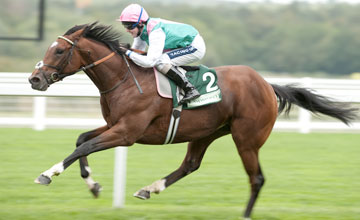
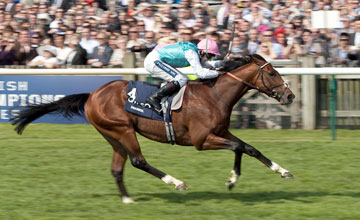
Yesterday was the Eclipse at Sandown. The Eclipse is one of the most storied races in turf history. It was founded in 1886, as Britain’s richest ever race, with a prize of £10,000 donated by Leopold de Rothschild. It was named after one of the greatest racehorses that ever lived, the mighty Eclipse himself.

Eclipse was an extraordinary horse. He was foaled in 1764 during a solar eclipse, hence his name, and he was never defeated. He had to be retired because no one would take him on any more. When he went to stud, he produced a rattling roll of honour of great classics winners.

His own pedigree is equally stellar: he had the Godolphin Arabian on his sire’s side, and the Darley Arabian (my own mare’s ancestor) on his dam’s side. This means he is descended from two of the three founding sires of the entire thoroughbred breed. Almost every horse racing today can trace its bloodlines back to him.

This year, the race was very exciting. It was packed with quality horses, who had won races all over the world, from Italy to Dubai. The favourite was the progressive Farhh who was a fast-finishing third after getting boxed in at Ascot. The question mark in the race was the lovely big colt Nathaniel, who has class and stamina in abundance, but had been off the track since October. He had been seriously ill with mucus on his chest, and his preparation had been seriously affected.

His trainer, the thoughtful and brilliant John Gosden, had given some very downbeat interviews, talking about how difficult it had been to get the horse right again, and warning the betting public, very correctly, that he was not quite sure his horse was completely match-fit.

It’s very hard to get a horse tuned up for a big race without a run first. You often hear in racing the expression ‘he needed the race’. There is only so much you can do on the gallops at home. Often, these mysterious, sparkling creatures need the heat of battle to bring them to their best. The catch-22 is that often you can’t quite tell how near their best they are without running them.

Nathaniel went off in front. They all came at him; the Italian raider, the Dubai winner, and one by one he fought them off. Then, out of the pack, on the wide outside, came the blue colours of Farhh, with Frankie Dettori crouched over his neck, finishing like a train.

This was where the fractured training preparation would show; fitness and strength would be tested to the limit. Some horses would fold like a house of cards under a challenge like that, after a mile and quarter in front on testing ground. Not Nathaniel. He stuck his big, bonny head out a little further, and kept on galloping. He had a look in his eye which said: none of you buggers is getting past me today.

You couldn’t really call Nathaniel an underdog. He is a top class horse from a top class yard under a top class jockey. He holds the distinction of being the horse who has finished closest to the imperious Frankel, getting to within half a length of him when they were two-year-olds. But because of him having been sick, because it was first time out, because there were whispers of poor performances on the gallops, because of the doubts of Mr Gosden, he felt like the underdog. It made the victory a very sweet one indeed; he won that race on talent, but he won it also on heart and guts.

So, all was joy. Commentators were throwing about words like brave and brilliant. Everyone was delighted with the remarkable training performance from John Gosden and the stellar ride from William Buick, who was grinning all over his young face. Into this cauldron of happiness went Mike Cattermole, with his Channel Four microphone. He politely approached Lady Rothschild, the owner, and congratulated her, and remarked on the astounding fact that this was her seventh winner in two weeks. (She had just won the Lancashire Oaks with one of the nicest three-year-old fillies I’ve seen in ages.)

‘So they tell me,’ she said, rather oddly. I wondered what this could mean. Who were this mysterious They? Did she delegate minions to watch the races for her?

And then she ran away.

I’ve never seen anyone do that after a race. She actually scuttled away from poor Mr Cattermole, who was left on live television with no one to interview. Someone must have said in his ear that the gentleman standing in front of him was Nathaniel Rothschild, the son of the owner, after whom the horse was named.

In tones of joyous relief Cattermole said: ‘So you are Nathaniel!’

‘Nat,’ said Nat Rothschild.

Cattermole at this stage was clearly going into some kind of cosmic broadcasting nightmare.

‘Nathaniel is nicer?’ he said, hopefully, hopelessly.

‘We like Nat,’ said Nat Rothschild. A woman standing next to him giggled, as if this were a great joke.

Mike Cattermole made a doomed attempt to get him to say something, anything, about the horse, the race, the occasion. Nothing. There was an indecipherable mutter, and then silence. Eventually some sort of spokesman stepped forward and made some anodyne remarks, and poor Mr Cattermole must have been led away and fed valium and brandy.

I try not to do ad hominem, because I am thin-skinned enough, and I don’t like bitching people up when I can’t take it myself. But occasionally I am driven to it.

That little scene was one of the most peculiar, ungracious, downright rude things I’ve ever seen on a racecourse. Nathaniel Rothschild had just led his winner in, punching the air in triumph, as if he had ridden the horse himself. Would it have killed him to have said something nice to the good people at Channel Four? Could he not have paid tribute to the patience and cleverness and hard work of John Gosden? Could he not have mentioned that it takes a team of dedicated people to get a horse like that to win such a race?

If it had been me, I would have thanked the vet and the farrier and the head lad and the travelling head lad and the damn postman. I would have pointed out that the horse would not have been there without the devoted care of the person who looks after him every day, and the person who gets up at the crack of dawn to ride work, in rain and shine.

I would have hymned to the skies the determination and skill and strength of the young jockey, who timed his fractions to perfection, and got every last ounce of stamina and speed out of his horse. I would have sung a song of the horse himself, of his genuine character, his courage, his marvellous will to win. I might have had to be dragged away before I started on a paean to the long line of champions from whom he was descended. I would have been speaking of the Darley Arabian as some desperate producer shouted: ‘Cut to advertisements.’

I don’t know about the Rothschilds. Perhaps they were having a really awful day. Perhaps their dog just died or something. But what I don’t understand is that it is so much easier to be nice. Grace and manners not only add increments to the sum total of human happiness, but they are much easier to do than taciturn sullenness. It was a most inexplicable lack of sophistication or charm.

At the other end of the scale, Shirley Teasdale, the young apprentice I wrote of the other day, took the time to leave an incredibly polite and charming message on the blog. Teasdale, unless her family secretly owns Yorkshire, does not have Rothschild millions, but she could teach them a lesson in manners. Apparently, reading what I wrote about her made her mum very happy. This is one of the good miracles of the internet. I am almost more delighted by the fact that I have made Shirley Teasdale’s mum smile than by anything else that has happened this year.

Radio programmes often have regular contributors; this is a friend of the show, the host will say. I am going to make Shirley Teasdale a friend of the blog. I’m so impressed with her that I’m going to follow her through her season and report back.

I told my own mother about Shirley Teasdale today. She was enchanted by the whole story. ‘I tell you what,’ I said. ‘I’d take a bet on her being the first woman to win the Derby. I might ring up William Hill and ask if they are making a book on that.’

My mother fingered her iPad, on which her own William Hill account was showing. She was considering having a little punt on Andy Murray in the tennis. ‘It’s called the patriotic bet,’ she said. ‘7-2 to win the first set and then the match.’ But I could see her wondering if she might not be better off betting on Shirley.


Pictures of the day:

8 July 1

8 July 2

8 July 3

8 July 4

8 July 5

8 July 6

8 July 7

8 July 8

It’s been a rainy old two days, so Red and I have not been riding. Back to groundwork: circus tricks yesterday; moochy old donkey today. She was so sweet and biddable this morning that I only worked with her for twenty minutes and then just spent the next twenty rhythmically rubbing her neck, which is the consistently of velvet after the rain. I know I have my theory about not babying a horse, but that does not mean Red does not get the love. She adores the neck rub so much she goes into a hazy trance of pleasure.

Here she is this morning:

8 July 10

8 July 11

Later, the Pigeon and I played ball. Are you going to throw the damn thing?:

8 July 15

YES YOU ARE:

8 July 13

Hill, under a flat white sky:

8 July 20

So much for flaming July.

Monday, 18 June 2012

Frankel

Posted by Tania Kindersley.

I am going to attempt a little mobile blogging, because there shall be so much to tell you. Sadly, no pictures though. You shall just have to paint mind pictures of Red and the Pigeon until I return to my desk.

I sit in the lovely London flat of a generous relation, hardly able to believe that only fourteen hours ago I was sitting with my mare in her damp Scottish field. In my absurdity, I had to rush up to say goodbye before catching the train south. She was lying down when I arrived, dozing. I know I bang on about it all the time, but horses are flight animals; it is very, very rare for them to lie down in the presence of a human. Often, they do not lie at all, but sleep standing up, their heads lowered, one eye flickering, just in case of predators.

I walked in very softly, not wanting to disturb. She was not disturbed. I sat down next to her in my London kit, and gave her some nuts, and stroked her dear white face. She was still lying there, contemplating the universe, when I left.

Tomorrow, there shall be another wonder horse, of quite another kidney. Frankel is so wild and majestic that he has been known to trash his box, pulling the manger off the wall, turning his rug inside out. Someone has to go and check on him at ten at night, to make sure he has not been up to his emperor's tricks. No dopey lying down for him.

I've written about Frankel so often that I scrape the barrel for superlatives. His bald figures are enough: never beaten, top-rated horse in the entire world. The not being beaten thing is extraordinary enough on its face. Even the best horses have an off day. Sometimes they don't get the luck in running; the ground might not be right; the jockey may make a tactical mistake. The mystery of the thoroughbred is such that racing people have a good, honest expression for it. They say: he just did not run his race. No one knows why.

Frankel always runs his race. He runs it with such power, such exuberance, such glory and joy that he puts himself into a category all his own. His dancing, raking stride eats up the turf, making fine horses look ordinary. He has a singularity, a fired determination, a straightness in running that makes watching him feel like poetry. It is elemental, and beyond mere prose.

Tomorrow is the first time I shall see him in the flesh. It is the first time I shall hear the roar, sense the crack of electricity in the air. Usually, when a horse I love goes out to do his thing, I hedge the race about with caveats. Anything can happen in racing, I say. This time, I have no caveats. If Frankel gets beat tomorrow, I shall eat my hat. Which shall be fatal, since I only have one hat.

He is the reason that I have travelled five hundred miles, even though I hate to travel. He is the reason I have left my dear little Pidge with The Mother, and left my gorgeous mare dozing in her field. He is the reason I shall put on my damned hat.

I am very, very lucky to be alive to see him. He is one of the few we shall all remember, when we are old and crabbed.

If you are near a television at two-thirty tomorrow, switch on BBC1. Unless something very terrible happens, you shall see history. You shall see a king, in all his glory and pomp. Let us hope the hat goes in the air, where it belongs.

Saturday, 19 May 2012

All hail the mighty Frankel; or, I doff my hat to a true champion

Posted by Tania Kindersley.

It’s Frankel Day.

IT’S FRANKEL DAY.

I actually woke up at five to seven this morning thinking: it’s Frankel Day. It felt like Christmas day. The sun was shining through the window; the dog was smiling; it felt like a day of jubilee.

When I get excited about a horse like this, I always want to write the blog before he runs. If there is some terrible disappointment, as there may always be in racing, I want to record the hope and joy first. I want to say it is Frankel day, rather than it was Frankel day.

So, what is it about Frankel? For those of you for whom the name means nothing, he is a four-year-old colt who has won every single one of his races so far. When you look at his form, it goes: 11111-.

This is rare in itself, but there is more. It’s not just that he wins, it’s how he wins. Last year, when he ran in the first classic of the season, the 2000 Guineas at Newmarket, he went out in front so fast and so far that people watching thought for a moment he was the pacemaker. There are a few front-runners in racing, happy types who like to bowl along in front and lead the pack, but mostly great champions like to be covered up. They lie back, with something to chase, and then are produced near the end. Even if a horse does like to go in front, you almost never see something blasting off fifteen lengths in front and never coming back to the field.

Frankel galloped out of the stalls so quickly and roared into a long lead so fast that he had good horses labouring behind him after the first furlong. Nothing could even get close, and these were the best horses of their generation. The farther they went, the faster Frankel ran, his stride lengthening and deepening, tearing up the turf as if he were in a five furlong sprint instead of a testing mile. It was the most imperious performance I’ve ever seen. There are jockeys riding today who say they have never witnessed anything like it.

He never did anything quite that spectacular again, but he did not need to. He beat all comers in the best races, by two lengths, four lengths, five lengths.

He does something else astounding: when he is asked for acceleration, he quickens so immediately that it looks as if he has gone from cruise to turbo in the blink of an eye. It is pure, fierce, elemental power. Sometimes horses, even very good ones, take a moment to pick up, when asked the question; not Frankel. His response is instant, startling, almost unbelievable.

He is not a gentle, dear sort of horse. He is a fierce, mighty champion. He puts his ears flat to his head when he races, sticks his wide face with its white star right out so it is parallel to the ground, stretches his neck, every atom in his great, powerful body straining to win, to get in front, to beat everything in sight. There are people who say that he breaks the hearts of other horses, his strength and speed are so relentless.

For all that he is trained by one of the most talented men in racing, Sir Henry Cecil, who will use all the most sophisticated techniques at his disposal, Frankel has something wild and untrammelled about him. With flat horses, especially colts, you do not want to domesticate them too much. I was always told, as a child, don’t pat the colts. I loved them, and wanted to pet and gentle them; quite apart from the fact some of them might have had my arm off, they were not there for gentling. You want to keep as much of their wild, pack instinct as possible; the glorious, free ancestral memory that they get from those three original sires from whom all thoroughbreds are descended. That is what drives them to the front and keeps them there.

Perhaps that is what so exciting: it is the very fine line between the modern domestic and the ancient wild. Humans are very confined; we must wear clothes and have manners and do jobs and be rational and suppress some of our more crazy instincts. So there is something very wonderful in seeing that wild spirit out there on the green track.

The final, most striking thing about Frankel is the way he moves. I’ve written of this before. He has a stride which is so long, so deep, so raking, that sometimes it seems as if he is galloping at one stride for every other horse’s two. It looks as if he is dancing. It is a most striking combination of the effortless and the purely powerful. It is almost impossible to describe in words. It makes the hairs on the back of the neck stand on end. He never deviates from a straight line, just goes right to the line, true as an arrow.

He has brilliance, bravery and an indomitable will to win. There’s no funny business, although he can get a bit het up before a race. Once he is out there, where he was bred to be, he runs as if it is the only thing he has ever wanted to do. It’s a high glory.

Today, he comes out for the first time at four years old. Some horses do not train on; often, when they are successful at three, they are sent straight to stud at four, so no defeat will mar their reputation and reduce their stud fee. Frankel’s owner, Prince Khalid Abdullah, has very sportingly allowed his star to come out for another season, so that we may have the profound pleasure of seeing him. The horse looks as if he has come on over the winter, grown up, developed in strength and depth. He is a big, bonny fellow, deep in the girth, muscular and compact.

Anything can happen in racing. One stumble can finish a career. Nothing is nailed on. So my nerves mount.
I love the great champions. I love them for their raging brilliance, their heart and guts, their shining desire to win. I hate to see them brought low. All I want today is for this champion, perhaps the greatest I have ever seen, to soar.

Even if you have no interest in horses, it will be worth tuning in to Channel Four at 3.40 this afternoon. You may witness something extraordinary.

At full stretch, photograph uncredited:


Amazingly well-developed, even as a two-year-old. Photograph by Edward Whitaker:

 
Frankel wins The Juddmonte Royal Lodge Stakes at Ascot 25.09.2010

At three, in his pomp. Photograph by Edward Whitaker:

Frankel - - Newmarket Guineas Meeting 30.4.11

The first time we’ve seen him at four, doing a racecourse gallop two weeks ago, photograph by the Press Association:

Frankel with jockey Tom Queally.

His lovely face, by Alan Crowhurst:

Frankel by Alan Crowhurst

 
No pictures from me just now; I might do a later blog with pictures this evening, if I have any strength left in me. Win or lose, I shall be wiped out after this, there is so much hope and emotion invested.

There’s a lovely little BBC film about him here, if you would like to see the beauty in action:
http://www.bbc.co.uk/sport/0/horse-racing/13769548

Friday, 11 May 2012

In which horses take on politics, and horses win

Posted by Tania Kindersley.

I do 1256 words today, and some interesting research. I am not getting huge satisfaction in my work at the moment, battling and struggling, but that is par for the course. I keep my head down, and continue to bugger on. By lunchtime, I am quite tired and fed up, so I decide to give myself a little present of a pot of coffee and an hour off. (I suddenly realise this sounds quite normal, but at the moment, I am so crazed that I consider taking ten minutes for a sandwich at lunchtime profligate. So a whole hour feels like infamy.)

I have a choice, between my two favourite subjects: politics, and racing. I had a swift look at Leveson. I’ve been vaguely aware that it has been going on all week, because it lights up the Twittersphere like almost nothing else. Normally, my political geekery would insist that I take the whole week off and watch, but now there is no room for that. In the spirit of a tremendous treat, I turned on the internet. I waited to be riveted by high legal and political theatre. An investigation, after all, into the relationship between politicians and the press could not be more fundamental to our democracy.

Oh my goodness it was dull. You think horse stories are boring, wait until you hear Rebekah Brooks explaining about how she went to Matthew Freud’s party and ‘popped in’ for mince pies somewhere in Gloucestershire for Christmas. I could feel the atoms of my body slowly moving towards the exit, as the life force was sucked out of me.

What is odd about this is that everyone who has ever met her in life describes Rebekah Brooks as astonishingly charismatic. So she has clearly made a strategic decision to be dull, which is interesting in itself. The QC, Robert Jay, who trended on Twitter all afternoon as Mr Jay, also appeared to believe that anodyne was the correct approach. His questions seemed disconnected and bland. I have the stereotypical view of barristers, all Shakespearian oratorical flourishes and the whiff of Dickens. This one, though apparently a star in his field, was more like an inspector of works. Again, I'm perfectly sure it was on purpose, I just can't quite work out what the purpose is.

I really did want my money back. So I turned over to Chester and watched an absolutely beautiful three-year-old colt called Astrology, a bonny son of Galileo, with a lovely, raking action, absolutely trot up, with my ten quid on him. I shouted, the dog barked, I felt the will to live return. People love Chester, although it’s a bit of a mixed meeting, and has been dogged by rain all week. But today, the sun shone on the glorious equine backs, and some really nice horses showed their class, and a brilliant eighteen-year-old jockey called Joseph O’Brien looked as if he shall go right to the top.

It was aesthetic, and exciting, and even though it’s flat racing, and so a lot about money, in a way that jumps isn’t, it had a purity to it which lifted my heart. It was a million miles away from the drab, badly lit room, with the flat answers about text messages and mince pies and ‘popping in’.

I don't know why the popping in thing bothered me so much: for some reason I don't think successful, accomplished women should 'pop' anywhere. I think they should go to places, and be done with it. But this is an unreasoning prejudice, and I think has come on because this bloody weather is driving me demented. The temperature hovered around five degrees for most of the day, the clouds lowered and shifted, there is snow on Red's mountain, and the wind blasted in from the west, hard and implacable. I know that I am supposed to be able to generate sunshine in my heart, which is the only sunshine that matters, but sometimes it does feel like an uphill scramble when the elements continue so unkind.

Tomorrow, I think, someone said somewhere that tomorrow there will be sun.


Too gloomy for pictures today, so here are a few from when there was some light:

11 May 1 03-05-2012 17-52-52 4032x3024

11 May 2 10-05-2012 10-22-17 3024x4032

11 May 3 08-05-2012 19-03-28 4032x3024

11 May 4 08-05-2012 19-06-16 4032x3024

11 May 6 27-04-2012 13-50-46 4032x3024

11 May 7 27-04-2012 13-53-31 4032x3024

11 May 8 27-04-2012 13-52-33 1936x1512

11 May 9 27-04-2012 13-17-15 1208x1700

11 May 10 09-05-2012 09-37-27 2138x2799

11 May 10 03-05-2012 17-49-55 3024x4032

11 May 15 07-05-2012 19-16-32 3978x1708

Wednesday, 27 July 2011

The Titans

Posted by Tania Kindersley.

The manuscript is sent off. This is only second draft time, so there is still a long road to go. I need to do more reading, and then there shall be third and fourth and fifth drafts. But the main donkey work is done. I am going to take two days off and watch the ponies.

I call my mother and shout at her about the racing for a bit. (I always shout when I get excited.) It is Goodwood, which is always a lovely meeting, but it is also one of the most anticipated races of the year, as the two best milers we have seen for a generation go up against each other. People are dividing into camps: are you Team Canford or  Team Frankel?

‘I want Frankel to win,’ I yell.

‘I want Frankel to win,’ says my mother.

As always, I must justify my loyalty. I can’t just be saying things.

‘I love Canford Cliffs,’ I say. ‘He’s a really good horse. He was extraordinary at Ascot. But Frankel, Frankel is a…’

I almost say freak. But that word has too many negative connotations. Frankel is a titan, a mighty masterpiece of nature, an emperor. He has never been beaten. But it’s not only that; it’s the way he runs. When he won the Guineas, he charged off in front, more like a wild brumby than a finely tuned racehorse. This happens sometimes in smaller races; the lovely Hungarian Overdose did it all over Europe a few years ago; but you almost never see it in a classic race.

In the big classics, there are tactics, and waiting games, and clever positioning. Jockeys time the race to the second.

‘Do you remember what they used to say about Steve Cauthen?’ I ask my mother, indulging in a moment of nostalgia. ‘They said he had a clock in his head.’

In top races, horses do not generally roar off into the lead and stay there. On that blindingly sunny day at Newmarket in April, Frankel not only stayed there, he kept accelerating. It was almost as if he were breaking the laws of physics, just for fun.

Of course, he did not always do this. When he was a baby, he used to start off at the back of the field, saunter along for a couple of furlongs, and then blast past five horses in five seconds, with the sort of acceleration that made it look as if someone had thrown a switch. It was a wonderful, paradoxical combination of the galvanic, and the entirely effortless.

He has another thing that the truly memorable horses have. It is a particular kind of action, very hard to describe. It is as if, within his great, raking stride, he has an extra leap. It’s the only way I can put it. He skates over the turf, legs extending and extending, until in the end it is like a great dancing motion. It has some extra, indefinable thing in it.

And, beyond all that, he has something more. It is not just the will to win. Many horses have that; they are pack animals, after all, and the desire to gallop to the front is bred into their bones. It is as if he thinks, in his horsey old head, that he has the right to win. Not in an arrogant way; he is not one of those showy, head-tossing horses. It comes across as the simple belief that there is no other place for him except for the front. It is as if the winning post is his spiritual home.

Frankel is a champion,’ I shout at my mother. ‘And you know how I hate to see great champions brought low.’

Of course, anything could happen. It is racing, after all. Brilliant horses get beat. I still don’t quite believe, almost thirty years on, that Dancing Brave did not win the Derby. He was another mighty horse who made your heart pirouette in your chest.

Last time out, at Ascot, Frankel’s miraculous, raking stride looked slightly ordinary for the very first time, in the closing stages of the race. He won, but not in the streaking, roaring, imperious way he had won before.

Canford Cliffs is a very, very good horse indeed. He is in his pomp. It could just be his day. Or, all the prognostications could be proven wrong, and one of the two outsiders could spring a mad surprise.

‘And Henry,’ says my mother, with a dying fall.

‘And Henry,’ I say.

We ponder the imponderable genius of Henry Cecil for a moment. No one can really say for sure why he is as great as he is. I call him Henry in the way that you call people you admire by their first names, even if you have never met them. My mother calls him Henry because she knows him. She lived in racing for thirty years, after all.

‘Something extra,’ she says, musing. ‘Some mysterious thing.’

‘They say horses just run for him,’ I say.

My mother thinks for a moment.

‘He loves his roses, you know,’ she says.

I think: you won’t get that kind of information in the sports pages.

I think: it would be lovely if Frankel could do it, so we could see a brilliant horse and a brilliant man get what they deserve.

I say to my mother: ‘I’m not sure I can watch.’


Here are the beauties:

Canford Cliffs:

Canford Cliffs photograph by Press Association

(Photograph by the Press Association.)

Royal Ascot

(Photograph uncredited.)

Frankel:

Frankel by Alan Crowhurst

(Photograph by Alan Crowhurst.)

Ascot day 2

(Photograph by Edward Whitaker.)

Frankel in 2010

(Photograph uncredited.)

Frankel’s sire, Galileo:

Galileo no attribution

(Photograph uncredited.)

Canford Cliffs’ sire, Tagula:

Tagula Sire of Canford Cliffs no attribution

(Photograph uncredited.)

And the great Sir Henry Cecil, Frankel’s trainer:

Henry-Cecil

(Photograph uncredited.)

There are many reasons to admire Henry Cecil, but one of them is that he is a sporting gentleman. This is what he told one newspaper, ahead of today’s race:

‘This race, it's important the best horse wins. If Canford Cliffs beats him fair and square, I shall be the first person to go up to Richard and say “Well done”.’

Richard Hannon, trainer of Canford Cliffs, returns the compliment:

‘Henry knows what he is doing. He’s one of the all-time greats…It's going to be a hell of a race. If there are any weaknesses in our fellow, I haven't found them. And Frankel is rated the best in the world. But one of them has to get beat.’

Richard Hannon by press association

(Photograph by the Press Association.)

Clash of the Titans, indeed, between two glorious horses and two great racing men. And don’t forget the jockeys, Richard Hughes and Tom Queally. Today may turn on tactics as much as raw talent:

Frankel-Canford-Cliffs

(Photograph from sportinglife.com.)

Let us hope that the day lives up to its billing, and does not turn out to be a damp squib. Let them all run their race, and come home safe.

If you want to see more of the majestic Frankel in action, there are two excellent videos here, and here.


And since we are talking about beautiful creatures, and a post would not be a post without the Pigeon in it, here is my very own little champion:

27 July 1

And now I really must stop, before I drown in a sea of anthropomorphic whimsy. If one can have a sea of whimsy. Which I’m almost certain one cannot.

Thursday, 23 June 2011

Bonus Post: a little bit of radio gold

Posted by Tania Kindersley.

This is one of the most enchanting things I've heard this year. It is a short radio trip to the Royal Meeting at Ascot, taken by the comedian Hardeep Singh Kohli. It confounds every expectation. You might think that Singh Kohli, whose parents moved here from India, and who was brought up in Glasgow, would not necessarily be the most obvious person to send to the most famous race meeting in the entire calendar. Racing, after all, is still rather old-fashioned, and very, very white. (Not, I think,in a horrid way, but simply because horse people come mostly from the countryside, and ethnic diversity tends to live in the cities. It's geography, more than anything else.) The cross people at The Telegraph, who are convinced the BBC lives to sneer at tradition, would certainly see this interesting bit of juxtaposition as an opportunity for the metropolitan types at the Beeb to scoff at the toffs.

Not a bit of it. Singh Kohli brings a lovely, generous, outsider's eye to the proceedings, admires the Queen, conducts two of the best interviews with Peter O'Sullivan and Henry Cecil I've ever heard, and ends up with a good old British sing-song. It turns out people still really do sing 'Maybe it's because I'm a Londoner'. It made me a bit teary.

Anyway, if you can get the iPlayer, have a listen:


BBC iPlayer - Royal Racers and Fascinators

LinkWithin

Blog Widget by LinkWithin